

10 Real Reasons Why Dogs Are Hunters
Dogs, our loyal companions, have an intriguing connection to their wild ancestors, the hunters. Despite domestication, many dogs still retain strong predatory instincts, driving them to chase, stalk, and even catch prey. But what really fuels this hunter’s spirit in our furry friends? Well, let’s explore the real reasons why dogs are natural-born hunters, and how these instincts shape their hunting behavior.
Why Do Most People Go Hunting With Dogs?
Some of the reasons why people hunt with dogs is because they enhance the experience with their keen senses, tracking abilities, and retrieval skills. Dogs have the ability to locate game more effectively, follow trails, and fetch shot animals quickly, making hunting more efficient and enjoyable. Aside from that, their companionship during hunting also adds a unique bond to the hunt.
SEE ALSO: 10 Real Reasons Why Dogs Love Bone
10 Real Reasons Why Dogs Are Hunters
Below are 10 reasons dogs have hunting instincts more than any other creature:
1. Evolution:
Evolution plays a crucial role in dogs’ hunting instincts because their ancestors, wolves, were hunters. Over time, wolves that were more skilled at hunting were more likely to survive and reproduce, passing on their hunting genes. When humans domesticated wolves, these instincts remained, even as dogs evolved into various breeds. Today, dogs still carry the genetic blueprint for hunting, which manifests in their behavior and abilities.
2. Prey Drive:
Prey drive is an innate instinct in dogs that compels them to pursue and capture prey-like objects or animals. This drive is strongest in breeds originally developed for hunting, such as sight hounds, terriers, and retrievers. Prey drive motivates dogs to chase, catch, and retrieve, mimicking the actions of their wild predecessors. It’s a key component of their hunting nature, driving their excitement and focus during a chase.
3. Pack Mentality:
Dogs’ pack mentality stems from their wolf ancestry, where hunting was a cooperative effort. In a pack, each member had a role, some would stalk, others chase, and a few would ambush. This teamwork increased hunting success. Domesticated dogs retain this social structure and often enjoy hunting with their human companions, seeing them as part of their pack. Working together strengthens their bond and leverages each individual’s strengths.
4. Stalking Ability:
Stalking is a vital hunting skill that dogs possess, allowing them to sneak up on prey undetected. They use their keen senses to locate and quietly approach their target. This ability is honed through practice and instinct, helping dogs get close enough to strike or alert their hunter. Stalking requires patience, focus, and understanding of their surroundings, all traits that contribute to a dog’s effectiveness as a hunting partner.
5. Strong Sense of Smell:
A dog’s sense of smell is far superior to humans’, and it’s crucial for hunting. They can pick up faint scents left by animals, tracking them over long distances. This keen olfaction helps dogs locate hidden game, follow trails, and even distinguish between different species. Their nose guides them during hunts, making them invaluable for locating prey in various environments.
6. Athleticism:
Dogs’ athleticism enables them to keep up with fast-moving prey and navigate challenging terrain. Their agility, speed, and endurance allow them to pursue game over long distances and in difficult conditions. Breeds like Greyhounds and Pointers are built for agility and sprinting, while others, like Labradors, excel at swimming and retrieving. This physical prowess makes dogs well-suited for various hunting scenarios.
7. Loyalty:
Loyalty is a cornerstone of the dog-hunter relationship. Dogs are devoted to their owners and eager to please, which makes them responsive to commands and training. This loyalty drives them to work diligently during hunts, following instructions and staying focused on the task. Their commitment to their human partners enhances the hunting experience and fosters a deep trust between them.
8. Instinctual Behavior:
Instinctual behaviors, like chasing and fetching, are hardwired into dogs’ nature. These actions mimic the hunt, even when they’re just playing. For instance, a dog chasing a ball or toy is essentially practicing the pursuit of prey. Such behaviors are automatic and satisfying for dogs, reinforcing their hunting instincts and preparing them for real-world hunting situations.
9. Problem-Solving:
Dogs are capable problem-solvers, a skill that serves them well in hunting. They can adapt strategies based on the situation, such as outsmarting wary prey or figuring out how to retrieve an animal from water or dense brush. This cognitive flexibility allows dogs to overcome obstacles and successfully complete hunts, showcasing their resourcefulness and hunting prowess.
10. Reward-Seeking:
Dogs are highly motivated by rewards, whether praise, treats, or affection. In hunting, the reward is often the thrill of the chase, the satisfaction of catching prey, and the approval of their handler. This reward-seeking behavior encourages dogs to hone their hunting skills and persist in their efforts, as they associate success with positive reinforcement.
How Do Dogs Help People Hunt?
Dogs help hunters by locating, tracking, and retrieving game, using their keen senses and skills. They also provide companionship and support, making hunts more efficient and enjoyable. Essentially, dogs are invaluable partners in the hunting process.
Understanding Hunting & Predatory Behavior in Dogs
Hunting behavior in dogs is rooted in their predatory instincts, which include stalking, chasing, grabbing, and killing. While domestication has softened these instincts for some breeds, many dogs still exhibit strong predatory drives. This behavior is influenced by genetics, environment, and training. So, understanding these instincts helps dog owners appreciate their pets’ natural behaviors and manage them appropriately, whether for hunting, companionship, or both.
Benefits of Using a Dog in Hunting?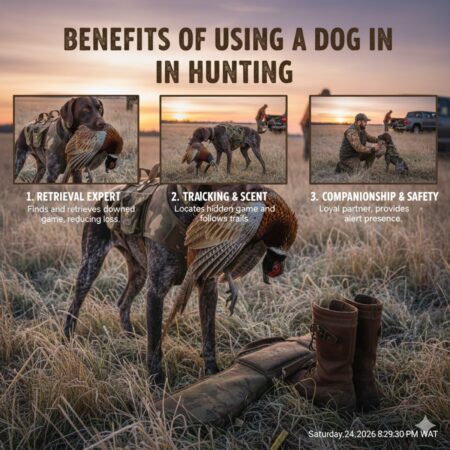
Using a dog in hunting offers numerous benefits like:
- Improved success rates due to the dog’s keen senses and tracking abilities.
- Enhanced hunting experience through the bond and teamwork between hunter and dog.
- Increased efficiency, as dogs can cover more ground and locate game quicker.
- Conservation support by promoting selective and sustainable hunting practices.
- Physical and mental exercise for both the dog and hunter, keeping them active and engaged.
- A unique, traditional connection to nature and outdoor pursuits.
Aside from the above, hunting dogs can serve as a deterrent to poaching and help maintain a balance in wildlife populations. They also provide an opportunity for social interaction among hunters, fostering camaraderie and shared experiences. Plus, training a hunting dog can be a rewarding endeavor, teaching discipline and strengthening your relationship with your canine companion.
When and Where Do Dogs Improve Hunting Productivity?
Dogs significantly boost hunting productivity in various scenarios:
- Early morning and dusk: Dogs excel in low-light conditions, helping locate game during peak activity hours.
- Dense cover: Their small size and agility allow dogs to navigate thick vegetation and flush out hidden animals.
- Waterfowl hunting: Retrievers and spaniels are invaluable in marshes and lakes, fetching birds in wet environments.
- Long-distance tracking: Breeds like Bloodhounds can follow trails for miles, leading hunters to elusive quarry.
- Cold weather: Some dogs, such as Siberian Huskies, thrive in snowy climates, aiding hunters in harsh winter conditions.
Top 10 Hunting Dog Breeds
Here are 10 popular hunting dog breeds, each with their own unique traits:
- Labrador Retriever: Excellent retriever with a strong nose and love for water.
- German Shorthaired Pointer: Versatile hunter for various game, with high energy and a keen sense of smell.
- Golden Retriever: Friendly, skilled retriever ideal for beginners.
- Beagle: Small but fierce, great for tracking rabbits and hares.
- English Setter: Stellar at locating and pointing game birds.
- Brittany Spaniel: Compact, energetic dog for bird hunting.
- Weimaraner: Fast, agile hunter suited for larger prey.
- Bloodhound: Unparalleled tracking ability due to its extraordinary sense of smell.
- Chesapeake Bay Retriever: Tough, resilient waterfowl retriever.
- Pointer: Specializes in pointing game, allowing hunters to approach undetected.
How Their Breed Affects Their Hunting Ability
A dog’s breed greatly influences its hunting prowess, as different breeds were developed for specific tasks:
- Sight hounds (e.g., Greyhounds) excel at chasing fast prey over open terrain.
- Scent hounds (e.g., Coonhounds) rely on their nose to track game, often in forests or rugged areas.
- Retrievers are bred to fetch shot animals, particularly in aquatic settings.
- Pointers and setters locate birds, freezing in place to signal their presence.
- Terriers and dachshunds hunt small game like rabbits and badgers, using their tenacity and burrowing skills.
Each breed’s physical traits and instincts make them suited to particular hunting styles and environments.
African Wild Dogs’ Efficient Hunting and Loyalty
African Wild Dogs are highly efficient hunters due to their coordinated pack tactics and stamina. They chase prey relentlessly, reaching speeds of up to 60 km/h. Their loyalty to the pack ensures each member plays a role, making them successful hunters. This loyalty also extends to their social bonds, as they care for injured pack members and pups.
In Conclusion,
Dogs are born hunters due to their ancestral lineage, instincts, and adaptability. Their keen senses, physical abilities, and pack mentality make them exceptional at tracking, chasing, and retrieving game. Whether bred for specific hunting tasks or displaying natural predatory behavior, dogs embody the spirit of hunters. Their loyalty and intelligence further solidify their role as indispensable companions in the field.
FAQs:
Are cats hunters?
Yes, cats are natural hunters. Even domestic cats retain strong predatory instincts, often exhibiting hunting behavior when chasing toys or small animals. Their agility, stealth, and sharp claws make them well-adapted for catching prey.
Are dogs particularly useful for hunting efficiency?
Absolutely, dogs greatly enhance hunting efficiency. Their keen senses, tracking skills, and ability to retrieve game make them invaluable assets. Dogs can locate and fetch animals much quicker than humans alone, saving time and effort.


