
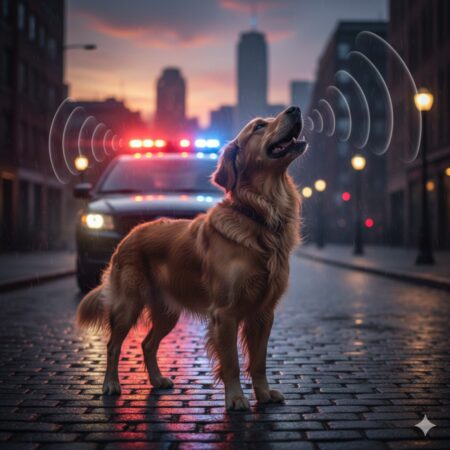
Why Do Dogs Howl at Sirens? Real Reasons Explained
Hahaha, you are not imagining it! Many dogs howl when they hear sirens, and it’s more than just noise. This instinctive reaction ties back to their wolf ancestors and unique hearing abilities. So, without wasting much time. let us explore the real reasons behind this fascinating behavior and what your dog might be trying to “say” when the siren sounds.
The Science Behind Why Dogs Howl at Sirens
Dogs howl at sirens due to their acute hearing and ancestral instincts. High-pitched siren sounds resemble wolf howls, triggering a pack-response reaction. Dogs may howl to join in, signal awareness, or express discomfort. This behavior is rooted in their evolutionary past and auditory sensitivity.
Do Sirens Make Dogs Sad?
Sirens don’t necessarily make dogs sad, but the sound can cause discomfort or anxiety. The high frequency may be startling or painful to their sensitive ears. Some dogs react with howling or stress behaviors, not sadness, but a response to an overwhelming stimulus.
Why Do Dogs Howl at Sirens?
Below are some of the real reasons why dogs howl at sirens explained to the lowest term:
1. Ancestral instinct: Dogs inherit pack-communication behaviors from wolves, who howl to locate each other.
2. Sound frequency: Sirens resemble high-pitched howls, triggering a response to “join” or react.
3. Sensitivity to noise: Dogs hear higher frequencies than humans, making sirens more intense.
4. Communication attempt: They may howl to alert the pack (you) or respond to what they perceive as a call.
5. Anxiety or discomfort: Loud or sudden siren sounds can startle or stress some dogs, leading to vocalization
6. Attention-seeking: Some dogs learn that howling gets a reaction, reinforcing the behavior.
7. Territorial response: They may see the siren as an intruder and howl to defend their space.
8. Echo effect: Howling can create resonance, which some dogs find stimulating or confusing.
9. Breed predisposition: Huskies, Malamutes, and other vocal breeds are more likely to howl.
10. Lack of habituation: Dogs not exposed to sirens may react more strongly due to unfamiliarity.
Why Do Dogs Howl at Sirens And Other Shrill Sounds?
Dogs howl at sirens and other shrill sounds because their hearing is far more sensitive than humans’, picking up high-pitched frequencies that resemble wolf howls. This triggers an instinctive response, either to join the “pack call,” alert their family, or express discomfort. Sounds like alarms, music, or even vacuum cleaners can elicit similar reactions, especially in vocal breeds. It’s a mix of biology, instinct, and learned behavior.
Why Do Some Dogs Howl at Sirens and Some Don’t?
Some dogs howl at sirens due to breed traits, sensitivity, and instinct, like Huskies or Beagles, who are naturally vocal. Others don’t respond because they’re less sound-sensitive, better habituated, or simply lack the instinct to vocalize. Past experiences, temperament, and training also play a role in whether a dog reacts or stays quiet.
What Breed of Dog Howl at Sirens?
Here are some of the breeds that are more likely to howl at sirens:
- Huskies: Highly vocal, pack-oriented, prone to howling.
- Malutes: Similar to Huskies, with strong ancestral vocal traits.
- Beagles: Use howling to communicate, especially when stimulated.
- Dachshunds: Alert and vocal, often bark or howl at sounds.
- Coonhounds: Bred to bay and howl during hunts.
These breeds have strong instincts and vocal tendencies, making them more reactive to high-pitched noises like sirens or ambulance.
Do Dogs Like the Sound of Sirens?
Dogs don’t “like” sirens the way humans enjoy music. Instead, they react to them instinctively or out of discomfort. The high-pitched tone can be startling or even painful due to their sensitive hearing. Some dogs howl in response because it mimics pack communication, not because they enjoy the sound. For many, it’s an automatic reaction, not a preference.
SEE ALSO: Why Is My Dog Barking at Guests? Solutions?
Why Do Dogs Howl?

Dogs howl for several reasons: to communicate with other dogs or animals, respond to high-pitched sounds like sirens or music, express loneliness or separation anxiety, or signal their presence. Howling is an inherited trait from wolves, used to maintain pack contact. Some dogs also howl when excited, distressed, or seeking attention, depending on the situation and individual temperament.
Types of Sound a Dog Can Howl at
Dogs may howl in response to the following sounds:
- Sirens: High-pitched, wailing tones mimic wolf howls.
- Fire alarms: Loud, piercing sounds trigger vocal reactions.
- Music: Instruments like flutes, violins, or harmonicas can set them off.
- Human singing: Especially high notes that resemble howling.
- Other dogs: Distant barks or howls prompt a reply.
These sounds share frequency or pattern similarities with natural canine vocalizations, sparking an instinctive response.
Why Do Dogs Howl at Night?
Dogs often howl at night due to heightened senses in quiet environments, where distant sounds like coyotes, sirens, or neighbors are more noticeable. The stillness amplifies their awareness, and instinct may drive them to respond as if communicating with other animals. Nighttime howling can also stem from loneliness, anxiety, or a disrupted routine. Some dogs simply react to stimuli they don’t encounter during the day.
Why Do Dogs Howl at High-Pitched Sounds?
Dogs howl at high-pitched sounds because their hearing is tuned to frequencies that resemble wolf howls, especially those between 1,000 and 5,000 Hz. Sounds like sirens, alarms, or musical notes fall into this range, triggering an instinctive response. This vocal reaction is rooted in pack communication: they may be “answering” the sound as if it’s another dog. It’s not about preference, but biology and inherited behavior.
Different Types of Howling of a Dog

- Lonely howl: Long, drawn-out cries when left alone—often linked to separation anxiety.
- Communication howl: Shorter, rhythmic howls to locate or respond to other dogs.
- Attention-seeking howl: Repetitive and insistent, used to get a reaction from people.
- Pain or distress howl: Sharp, urgent, and high-pitched—indicates injury or discomfort.
- Social howl: Group howling with other dogs, mimicking pack behavior.
- Environmental response: Triggered by sirens, music, or alarms—instinctive and automatic.
Each type reflects a different emotional or situational need, rooted in instinct, emotion, or learned behavior.
Why Do Dogs Howl Spiritual Meaning
Some people believe dogs howling has spiritual meaning like sensing spirits, warning of danger, or connecting with unseen energies. These beliefs stem from cultural folklore and the dog’s keen senses. However, there’s no scientific evidence for spiritual causes. In reality, howling is a natural behavior driven by instinct, sound, and communication not supernatural awareness.
Pros and Cons of Do Dogs Howling
Pros:
- Strengthens pack bonds through vocal communication
- Alerts owners to potential threats or unusual sounds
- Helps dogs express emotions like loneliness or excitement
Cons:
- Can be disruptive or annoying to neighbors
- May signal anxiety, pain, or distress
- Excessive howling can indicate behavioral or medical issues needing attention
SEE ALSO: 10 Reasons Why Dogs Don’t Like Their Paw Touched
How to Prevent Your Dog From Howling at Sirens

To reduce siren-related howling, here are what you need to do:
- Desensitize your dog by playing recorded siren sounds at low volumes, gradually increasing over time.
- Redirect their focus with a toy or treat when a siren sounds.
- Create a calm space with background noise (like music or white noise) to muffle sudden sounds.
- Reward quiet behavior to reinforce calmness during sirens.
- Avoid reinforcing the howl by giving attention mid-howl.
- Consistency and patience are key to changing this instinctive response.
In Conclusion,
Dogs howl at sirens due to a mix of instinct, acute hearing, and ancestral pack behavior and not because they understand the sound, but because it triggers deep-rooted responses. While it may seem mysterious, it’s a natural form of communication. But with patience and training, you can help manage this behavior while appreciating your dog’s unique connection to their wild heritage.
FAQs:
Are sirens painful to a dog’s ears?
Sirens aren’t necessarily painful, but their high pitch can be startling or uncomfortable for dogs due to their sensitive hearing. Prolonged exposure may cause stress, especially in sound-sensitive dogs.
Do all dogs howl at sirens?
No, not all dogs howl at sirens. It depends on breed, temperament, and sensitivity. Some remain calm, while others react due to instinct or curiosity.
Do dogs howl at sirens because it hurts their ears?
Not usually. Dogs howl at sirens more due to instinct or curiosity than pain. While the sound can be loud or startling, most aren’t hurt, just reacting to a high-pitched, familiar-like call.
Are dogs sad when they howl?
Not necessarily. Howling is usually a response to sound, instinct, or communication and not sadness. However, prolonged howling when alone could signal loneliness or anxiety.


