

Why Dog Makes Grunting Noises When Sleeping?
Dogs often make intriguing sounds while they sleep, and grunting is one of them. It can be puzzling to hear your furry friend emit these noises during their dreams. But don’t worry, grunting in dogs is usually normal and can signify contentment, dreaming, or even a reaction to a physical issue. Let’s explore the possible reasons behind this adorable yet curious behavior.
Why Does My Dog Grunt Like a Pig?
Your dog grunts like a pig due to natural sleep behaviors, like dreaming or relaxed breathing. It’s usually harmless, but if accompanied by other symptoms, consult a vet to rule out health issues.
Dog Grunting When Breathing
Grunting while breathing in dogs can be normal, especially when they’re asleep or relaxed. However, if it persists or sounds labored, it might signal breathing difficulties, requiring veterinary attention.
SEE ALSO: Dog Walking Tips for Less Than Perfect Weather Conditions
Some Common Reasons Why Dog Makes Grunting Noises When Sleeping?
Dogs grunt during sleep for several reasons like:
-
Dreaming: Grunting can be a reaction to dreams, similar to humans talking in their sleep.
-
Sleeping position: Pressing their tongue or chest against the floor might cause grunting sounds.
-
Relaxation: Deep relaxation leads to slower breathing, which can result in grunting noises.
-
Age: Senior dogs often grunt more due to age-related changes in breathing.
-
Breed characteristics: Some breeds, like Pugs, are prone to grunting because of their flat faces.
-
Excitement or anxiety: Grunting can occur when dogs are emotionally aroused, even during sleep.
-
Medical issues: Obstructive airway diseases or heart problems might cause grunting in some cases.
-
Sleep stages: Grunting often happens during REM sleep, when dreams are most vivid.
So, understanding these causes can help you determine if your dog’s grunting is normal or needs medical evaluation.
Why Is My Dog Groaning While Sleeping?
Your dog’s groaning during sleep is likely a sign of dreaming, shifting positions, or aging. It’s common and typically not a cause for concern, unless accompanied by distress or other unusual symptoms.
Weird Dog Sounds and When to Worry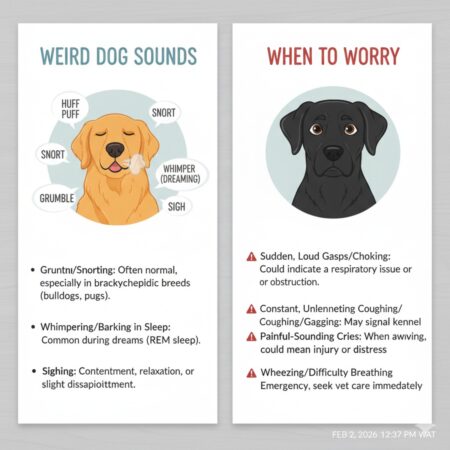
Below are some unusual dog sounds and their implications:
- Whining: Can indicate anxiety, need for attention, or pain. Worry if persistent or paired with other signs of distress.
- Howling: Often a form of communication, but could signal loneliness or health issues if excessive.
- Reverse Sneezing: A normal, though alarming, sound caused by nasal irritation. No action needed unless frequent.
- Coughing: Might be harmless, like a kennel cough, or serious, like heart disease. Seek vet care if it worsens.
- Growling: A warning sign, possibly due to fear, possessiveness, or pain. Address underlying causes.
- Yelping: Sudden, high-pitched sounds often mean pain or surprise. Investigate the cause immediately.
- Wheezing: Could point to respiratory issues, allergies, or obesity. Consult a vet for diagnosis.
- Snoring: Common in brachycephalic breeds, but loud snoring may suggest airway obstruction. Monitor breathing.
Why Does My Dog Groan When I Cuddle Him?
Your dog’s groaning during cuddles might mean they’re comfortable and relaxed, or possibly feeling a bit overwhelmed. It can also be a sign of contentment or even mild discomfort. Observe their body language to ensure they’re enjoying the affection.
Why is My Dog Groaning All of a Sudden?
Sudden groaning in dogs could result from pain, discomfort, or emotional distress. Check for injuries, arthritis, or gastrointestinal issues. If the groaning continues or worsens, a vet visit is advisable to identify the cause.
10 Sounds Your Dog Makes and What They Mean
Here are common 10 dog sounds and their meanings:
- Barking: Alerts to danger, excitement, or boredom.
- Whining: Expresses need, anxiety, or desire for attention.
- Growling: Signals fear, aggression, or resource guarding.
- Howling: Communicates loneliness or responds to noises.
- Panting: Normal breathing, but rapid panting can indicate stress or heatstroke.
- Sighing: Shows contentment or relief.
- Snarling: A more intense version of growling, suggesting heightened aggression.
- Yawning: Can signify stress, tiredness, or even a calming signal.
- Grumbling: A low, rumbling sound often associated with resource guarding.
- Clicking: Some dogs make a clicking noise when excited or trying to get attention.
What Can You Do to Help Your Dog Stop Making These Noises When He Sleeps?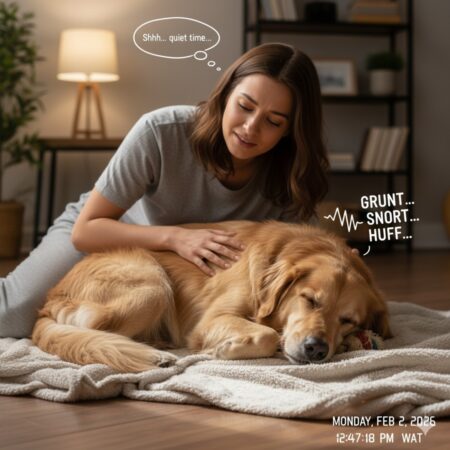
To help your dog with sleep grunting, here are what you need to do:
- Ensure a comfortable sleeping environment, like a supportive bed.
- Maintain a healthy weight to reduce breathing difficulties.
- Keep your dog’s airways clear by cleaning their nose and mouth.
- Elevate their head slightly while sleeping to ease breathing.
- Manage stress through calming exercises or supplements.
- Consult a vet if grunting persists or is accompanied by other concerning symptoms.
- Monitor your dog’s grunting patterns to identify triggers.
- Provide regular exercise to improve overall health and sleep quality.
- Consider humidifiers for dry air that might irritate your dog’s throat.
- Avoid disturbing your dog during sleep, as this can worsen grunting.
- Keep an eye on your dog’s age, as grunting often increases with seniority.
Groaning Dogs: What Could it Mean?
A groaning dog may be expressing discomfort, pain, or relaxation. It could also indicate aging, dream reactions, or medical issues. Observe context and behavior to determine if it’s normal or a sign to see a vet.
Dog Groaning in Pain (How To Know)
If your dog’s groaning is pain-related, look for these signs:
- Changes in behavior, like lethargy or aggression
- Reluctance to move or perform usual activities
- Whining or whimpering accompanying the groan
- Visible injuries, limping, or swollen areas
- Loss of appetite or changes in bathroom habits
Consult a veterinarian if you notice any of these indicators.
SEE ALSO: 10 Reasons Why Dogs Are Cleaner than Human
In Conclusion,
Dog grunting during sleep is a common phenomenon with various explanations. While it’s often harmless, understanding the possible causes helps you ensure your dog’s well-being. By recognizing normal grunting and distinguishing it from signs of distress, you can better care for your furry companion and enjoy peaceful nights together.
FAQs:
Why is my dog groaning at night?
Your dog might groan at night due to dreams, joint discomfort, or relaxation. If it’s occasional and they seem fine otherwise, it’s likely nothing to worry about. However, consistent groaning could signal an issue, so monitor their behavior closely.
Why does my dog make groaning noises when I pet her?
Groaning during petting can mean your dog feels relaxed, enjoys the attention, or is experiencing mild discomfort. Pay attention to their body language—if they seem tense or pull away, adjust your touch. Otherwise, it’s a sign of contentment.


