
Dog Walking Tips for Less Than Perfect Weather Conditions
Walking your dog is an essential part of their daily routine, but bad weather condition an make it a challenge. Whether it’s pouring rain, scorching heat, or freezing cold, venturing out with your furry friend requires some extra preparation and caution. Today, we will share practical tips to ensure you and your dog stay safe, comfortable, and happy during walks in less-than-ideal weather condition.
How Can Dogs Be Safely Exercised in Extreme Heat?
Exercising dogs in extreme heat requires careful planning such as:
- Schedule walks for cooler times, like early morning or evening.
- Choose shaded, grassy areas to prevent overheating.
- Keep walks short and avoid strenuous activities.
- Provide plenty of fresh water before, during, and after walks.
- Watch for heatstroke signs: panting, drooling, lethargy.
- Use dog boots to protect paws from hot surfaces.
- Consider indoor play or swimming as alternatives.
SEE ALSO: 10 Reasons Why Dogs Are Cleaner than Human
Dog Walking Tips for Less Than Perfect Weather Conditions
Below are some of the walking tips you and your dog can practice for safe and comfortable walks for less than perfect weather condition:
1. Rainy Days: Use waterproof gear, avoid puddles, and dry your dog afterward to prevent skin irritation.
2. Cold Weather: Dress your dog in a coat, limit exposure, and check paws for ice and salt.
3. Snow: Clear a path, use booties, and watch for hypothermia.
4. Wind: Secure your dog with a harness, and shield them from strong gusts.
5. Darkness: Wear reflective clothing, use a flashlight, and stick to familiar routes.
6. Mud: Clean your dog immediately, and trim fur around paws to prevent mud buildup.
7. Ice: Be cautious of slippery surfaces, and help your dog if they struggle.
8. Thunderstorms: Calm your dog with soothing music or a thunder shirt, and postpone walks if possible.
9. Fog: Walk slowly, use a leash, and rely on your sense of hearing for safety.
10. Extreme Cold: Monitor your dog’s behavior, and consider shorter, more frequent walks.
What are Some Tips for Walking a Dog in Hot Weather?
Walking a dog in hot weather requires these necessary precautions:
- Hydrate your dog with cool water to prevent dehydration.
- Walk on cooler surfaces like dirt trails instead of asphalt.
- Avoid midday heat; opt for dawn or dusk walks.
- Recognize overheating signs, such as excessive panting or collapse.
- Use a cooling vest or bandana to keep your dog cool.
- Never leave your dog in a hot car, even briefly.
How to Walk a Dog in Cold Weather?
Walking your dog in cold weather involves these safety tips below:
- Dressing your dog in insulated clothing for warmth.
- Inspecting paws for cracks and applying paw balm.
- Keeping walks brief to prevent frostbite.
- Watching for shivering, a sign your dog is too cold.
- Using a leash to control your dog near icy bodies of water.
- Providing a warm, dry place for your dog to rest after the walk.
What is The 5 Second Rule for Walking Dogs?
The 5-second rule for walking dogs is a safety check to prevent paw burns on hot surfaces. Place the back of your hand on the pavement, asphalt, or sand for 5 full seconds; if it is too hot for your hand, it is too hot for your dog’s paws.
Below are the key details of the 5-Second Rule:
- The Test: Place the back of your hand or hold your bare foot against the walking surface for 5 seconds.
- The Threshold: If it feels uncomfortable or burning hot to you within those 5 seconds, do not walk your dog on that surface.
- Why it Matters: Asphalt, concrete, and sand can become significantly hotter than the air temperature. For instance, some extreme hot weather condition can cause severe, rapid burns to sensitive paw pads.
- Prevention: Walk dogs during cooler, early morning or late evening hours, or stick to grass.
- Other Surfaces: This rule also applies to metal surfaces like truck beds, which can burn pets. If the surface fails the test, consider using protective booties for your dog or choosing a different, shaded, or grassy route.
Summer Dog Walking Tips
Summer dog walking tips include:
- Early morning or late evening walks to avoid heat.
- Checking pavement temperature with your hand to ensure it’s not too hot.
- Carrying water and a collapsible bowl for hydration breaks.
- Watching for heat exhaustion symptoms like labored breathing.
- Using sunscreen on your dog’s sensitive skin, like ears and nose.
- Providing shaded rest areas during long walks.
What is The Safe Temperature to Walk Dog in Summer?
A safe summer walking temperature for dogs is generally below 70°F (21°C). However, factors like humidity, your dog’s breed, and their acclimation to heat can influence this. So, always prioritize your dog’s comfort and adjust walk duration accordingly.
Winter Walking Tips for Dogs
Winter dog walking advice includes:
- Use dog coats and boots for warmth and protection.
- Clean your dog’s paws after walks to remove salt and ice.
- Limit time outdoors in extreme cold.
- Increase calorie intake to help your dog stay warm.
- Be mindful of frozen lakes and slippery surfaces.
- Keep an eye out for hypothermia signs, such as trembling.
Three Top Tips for Walking Your Dog in Snowy Weather
Below are 3 important tips for walking your dog in a snowy weather:
- Protect Paws: Dog booties shield paws from sharp ice and salt, while paw wax offers extra protection.
- Visible Gear: Bright coats or lights on your dog ensure visibility in snowy conditions.
- Shorten Walks: Reduce walk time to prevent frostbite and keep your dog comfortable.
Dog Walking in the Rain: Tips to Keep Your Dog Happy
Walking your dog in the rain can be enjoyable with these tips:
- Use a water-resistant coat to keep your dog dry.
- Go for a shorter route instead to minimize exposure.
- Clean your dog’s paws and coat after the walk.
- Offer a warm, dry towel for your dog to snuggle in post-walk.
- Maintain a positive attitude to show your dog rain walks are fun!
Best Time to Walk Dog Before or After Eating?
It is generally best to walk your dog before eating or to wait at least 1 to 2 hours after a meal to avoid dangerous digestive issues like bloat (GDV). Walking before meals helps burn energy, reduces risk of stomach twisting, and allows for better digestion.
Dog Walk Temperature Chart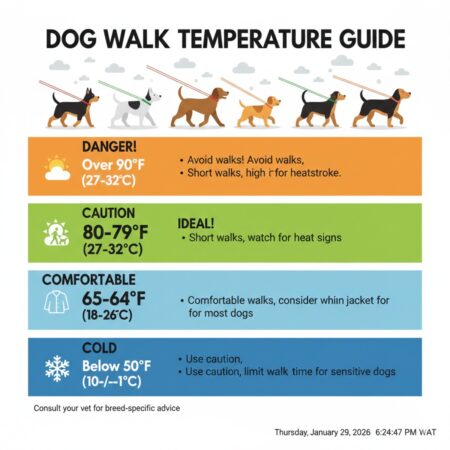
Here’s a general temperature guide for dog walks:
- Over 90°F (32°C): Avoid walks, high risk of heatstroke.
- 80-90°F (27-32°C): Short walks, watch for heat signs.
- 65-79°F (18-26°C): Ideal walking temps, safe for most dogs.
- 50-64°F (10-18°C): Comfortable for walks, consider a jacket for thin-coated dogs.
- Below 50°F (10°C): Use caution, limit walk time for sensitive dogs.
SEE ALSO: 10 Real Reasons Why Dogs Are Hunters
In Conclusion,
Dog walking in various weather conditions requires adaptability and care. By understanding your dog’s needs and adjusting your routine accordingly, you and your dog can ensure enjoyable and safe walks regardless of the weather. So, remember that a happy dog is one that feels secure and comfortable, even on less-than-perfect days.
FAQs:
Can I take my dog for a walk in cold weather?
Yes, you can walk your dog in cold weather, but take precautions. Dress your dog in a warm coat, protect their paws, and keep walks short. Monitor their behavior, and seek shelter if they show signs of distress.
What temperature should you not walk your dog in winter?
Avoid walking your dog when temperatures drop below 25°F (-4°C), especially for puppies, seniors, or dogs with thin coats. Extreme cold can cause frostbite and hypothermia.
Can dogs walk in snow without shoes?
Dogs can walk in snow without shoes, but it’s not ideal. Snow and ice can irritate their paws, and salt used for melting ice can be harmful. Booties or paw balm can help protect their feet.
What temperature is too cold for dogs to walk on pavement?
If pavement is icy or below freezing (32°F or 0°C), it’s risky for dogs. Frozen surfaces can be slippery, and extreme cold may hurt their paws. Use salt-free paths or wait for warmer temps.


